
Cybersecurity threats are evolving at lightning speed, and one of the most alarming trends in recent years is Phishing-as-a-Service (PhaaS). What was once a hacker’s skill-intensive task has now turned into a subscription-based underground business model.
In this article, we’ll break down what PhaaS is, how it works, why it’s dangerous, and — most importantly — how you can protect yourself.
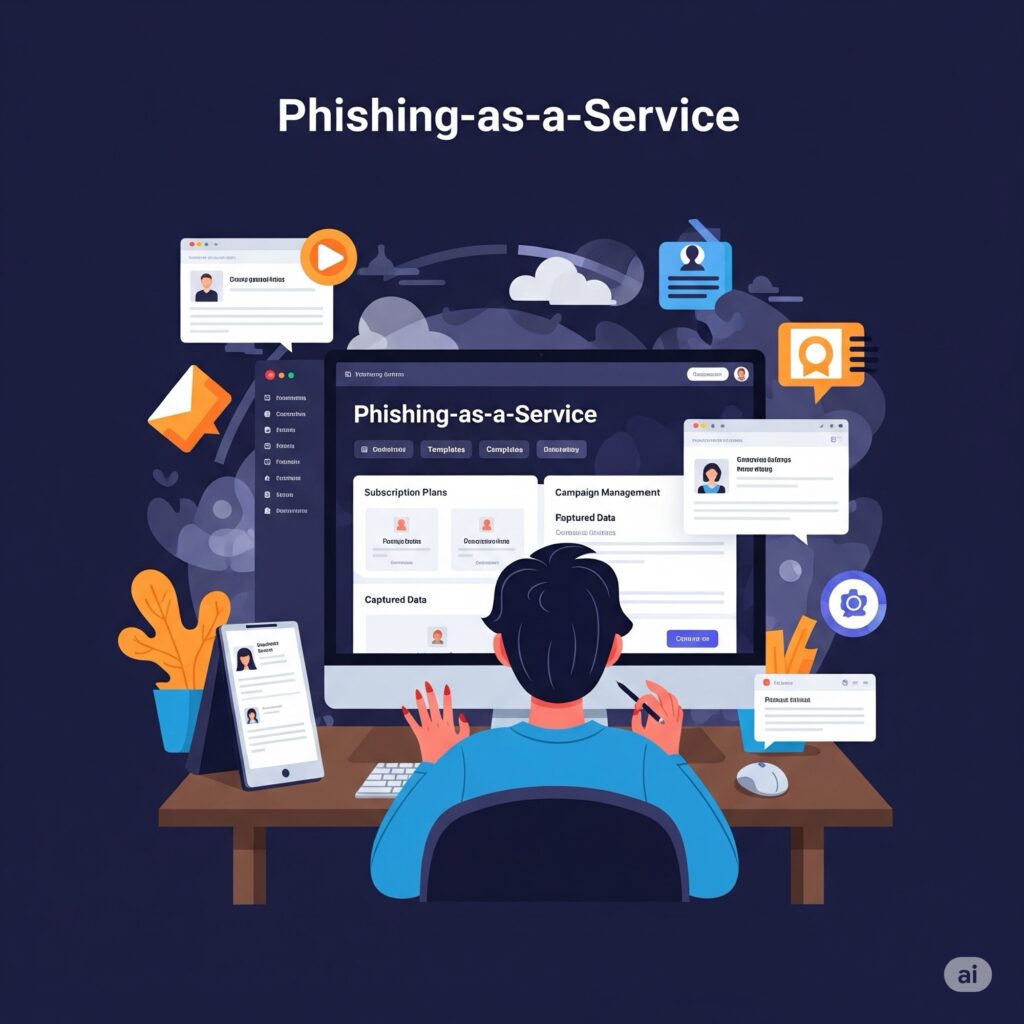
What is Phishing-as-a-Service?
Phishing-as-a-Service (PhaaS) is an illegal business model where cybercriminals rent or sell phishing kits to other attackers.
These kits typically include:
Ready-made fake login pages (Google, Microsoft, banking portals, etc.) Email templates designed to trick victims Bulk email delivery tools A dashboard to track stolen usernames and passwords Even customer support for “subscribers”
In short, PhaaS makes phishing easy, cheap, and scalable — even for people with little to no technical knowledge.
How Does PhaaS Work?
Here’s a step-by-step look at a typical PhaaS attack:
Sign Up – Criminals register on dark web forums or Telegram groups. Payment – They pay a subscription fee (monthly or one-time). Choose a Template – Fake websites are pre-designed to imitate trusted platforms. Launch the Campaign – Attackers use stolen or purchased email lists to send phishing emails. Capture Credentials – When victims enter details, the information goes straight to the attacker’s dashboard.
Some premium services also include:
Smishing (SMS phishing) Vishing (voice phishing) 2FA bypass tools for breaking through multi-factor authentication.
Why PhaaS is a Serious Threat
Phishing has always been dangerous, but PhaaS lowers the barrier to entry for cybercriminals.
Anyone can launch attacks — no coding needed. Attacks scale faster — one person can target thousands in minutes. More sophisticated — fake pages look identical to real ones.
This explains why phishing emails are increasing in frequency and sophistication worldwide.
How to Protect Yourself from Phishing
Here are some simple but powerful tips to safeguard your data:
✅ Think before you click – Hover over links to verify before clicking.
✅ Check sender details – Watch out for strange or misspelled email addresses.
✅ Enable MFA – Multi-factor authentication adds an extra layer of protection.
✅ Stay updated – Security awareness is your strongest defense.
✅ Report phishing attempts – Don’t just delete; report them to your organization or provider.
Final Thoughts
Phishing-as-a-Service has transformed phishing from a hacker’s skill to a cybercrime subscription model. This makes it more dangerous, widespread, and accessible than ever.
The best defense? Awareness and vigilance. By staying informed about how these scams work, you can protect yourself, your data, and your organization from falling victim.
🔐 Stay safe online with Security For You.